Underground Storm Shelters in Wichita Falls
Updated November 2026
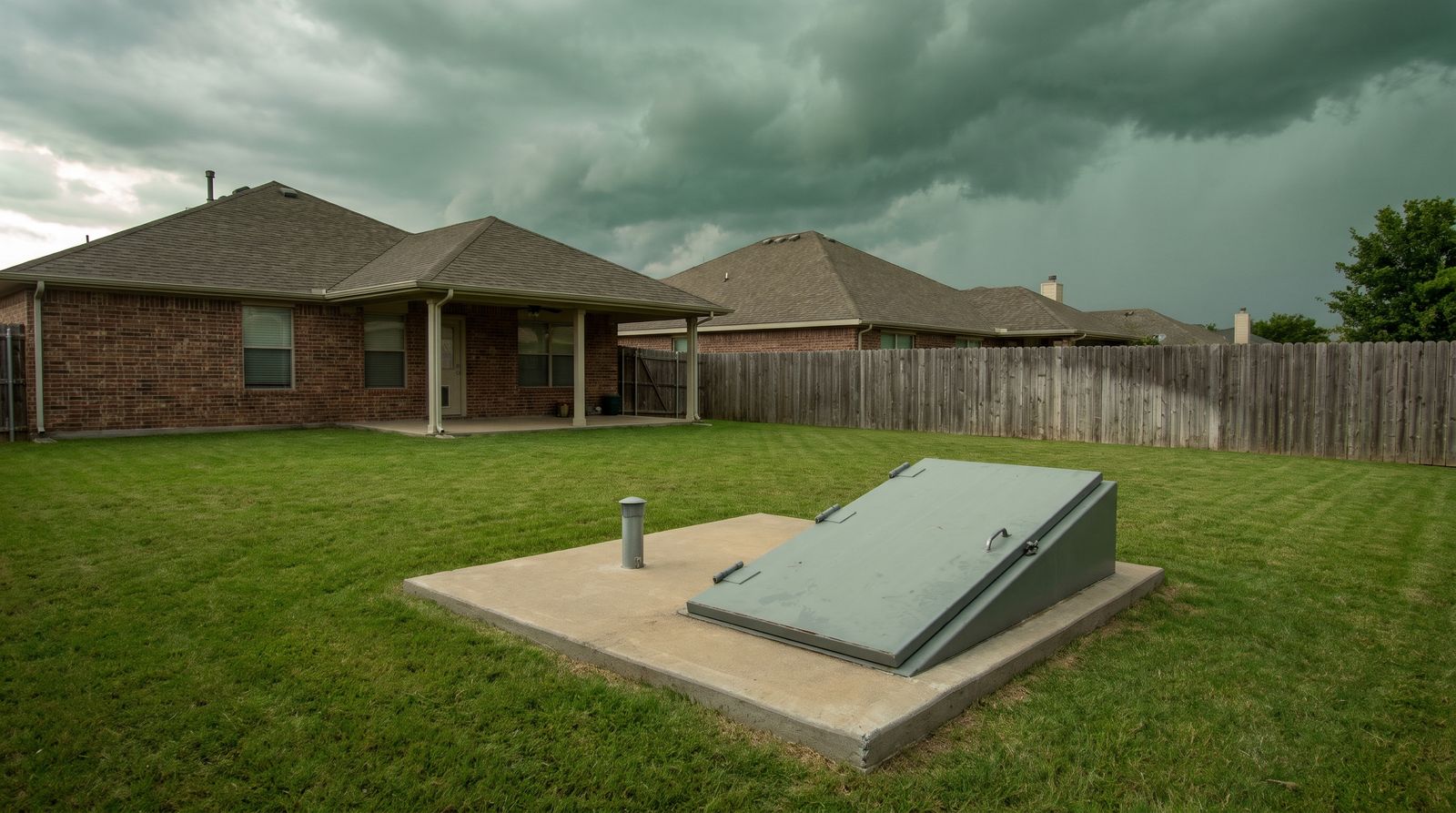
An underground storm shelter goes in the ground, either under your garage floor or out in the yard.
$4,000 to $15,000
Typical installed price. A range, not a quote.
Garage floor shelters usually run about $6,000 to $15,000. Yard shelters run about $4,000 to $12,000. Rocky or wet ground can push the price up. See the full price breakdown
Call (940) 400-3717 Or request a quote
- Once it is in, it takes up almost no space
- Under the garage floor or in the yard
- Steps down to get in
- Garage floor: a day or two. Yard: several days.
How an underground shelter goes in
- Pick the spot. Under your garage floor or out in the yard. The installer needs room to get equipment in and dig.
- Cut or dig. In a garage, the installer cuts a hole in your slab. In a yard, they dig.
- Set it in place. The shelter sits below the garage floor, or is buried with just the door showing.
- Seal it against water. Good sealing matters here, since a lot of the ground is clay.
Typical steps. Your installer will walk you through theirs.
How long does it take to install?
A garage floor shelter can often go in within a day or two. A yard shelter takes longer, usually several days, because of the digging and the weather.
How big a shelter do you need?
| People | Floor space |
|---|---|
| 4 to 6 | 20 to 30 sq ft |
| 8 to 12 | 40 to 60 sq ft |
| 15 or more | 75 sq ft or more |
Plan on 3 to 5 square feet per person, plus room for supplies.
Is an underground shelter right for you?
A good fit if
They're a good fit if everyone in your home can handle a few steps. Underground shelters are usually a good pick if:
- You don't want to give up garage or yard space
- Everyone in the house can get up and down steps quickly
- You just feel safer being below ground
Think twice if
- They can be tough for older family members or anyone who uses a wheelchair. Some come with handrails or easier steps, so ask about that if it matters for your family.
- Water is a big worry. See above ground shelters
How they work
Most underground shelters are steel or concrete. Being in the ground is what protects you from the wind and flying debris.
When a warning comes, you open the door, head down the steps, and close it behind you. The door is built to stay shut and locked until the storm passes.
Garage or yard?
Under the garage floor
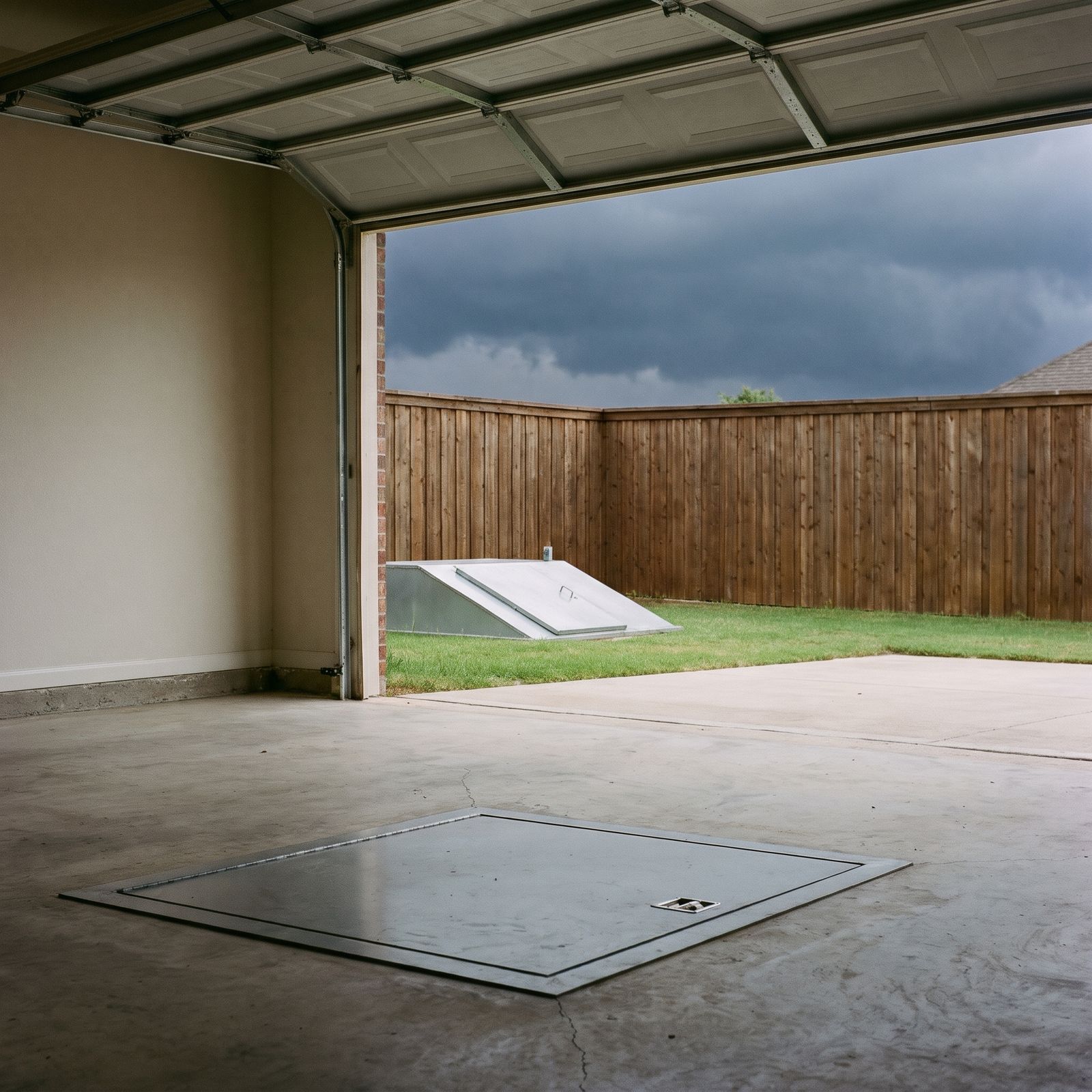
The installer cuts a hole in your garage slab and sets the shelter below it. Many have a sliding door that sits flat with the floor, so you can still park on top of it.
It's close to the house, and you don't have to go outside in a storm. See our garage storm shelter guide to compare it with an above ground unit.
In the yard
A yard shelter is buried with just the door showing. Your garage stays the same, but you'll have to walk outside to get to it.
The installer needs room to get equipment back there and dig. If your backyard is tight or fenced in, mention that when you call.
Will it flood?
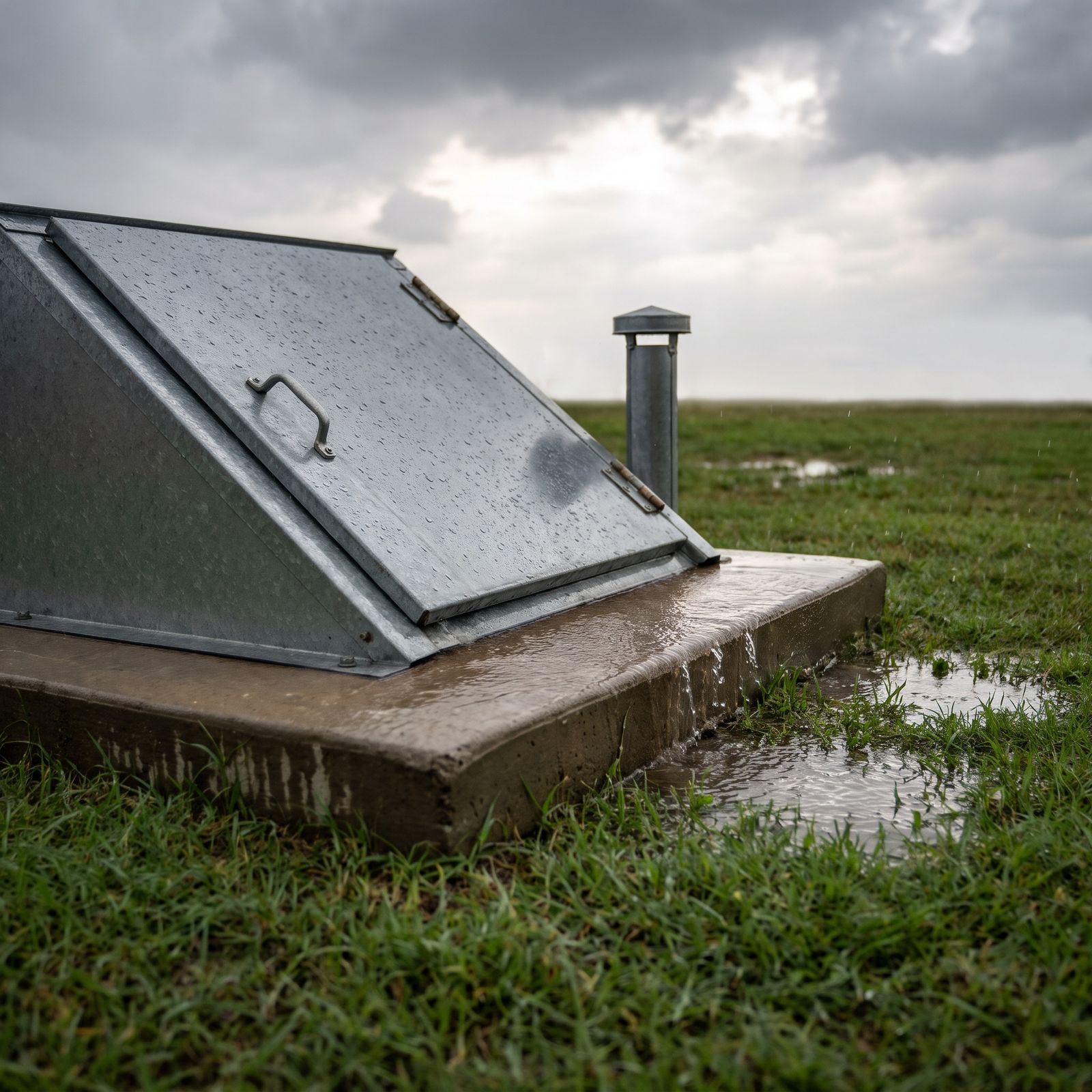
This is the number one question people ask, and it's a fair one. Anything below ground can take on water if it's not sealed and drained well.
A lot of the ground around Wichita Falls is heavy clay. Clay holds water and drains slowly, so after a big rain the dirt around a shelter can stay soggy for a while. That's why good sealing matters so much here. Some installs include a small sump pump to clear out any water that gets in.
Questions to ask the installer:
- How is it sealed against water?
- What happens in a heavy rain?
- Does my yard or garage drain well enough for this?
If water is a big worry, an above ground shelter takes that problem off the table.
Underground or above ground?
- Underground: saves space and stays out of sight, but means steps and digging.
- Above ground: no stairs and no digging, but takes up some garage or yard space.
Both work well. It comes down to your family, your property, and your budget. Still on the fence? See how to choose between above ground and underground.
What to ask before you buy
- Is it built to FEMA P-361 and ICC 500? These are the main safety standards for tornado shelters.
- How is it sealed and drained?
- How many people does it hold?
- Who handles the permit?
- What does the warranty cover?
- How soon can you install? Spring and early summer are the busy months. Fall and winter usually mean a shorter wait.
After it's in
Register your shelter with the city
The Wichita Falls Fire Department keeps a list of home shelters. If yours gets covered by debris, rescuers know where to look.
How to register (opens in a new tab)
If you live in rural Wichita County, you can register for free with the county (opens in a new tab) by sending in a short form.
In other towns, call your local police, fire department or sheriff's office to see what they offer.
Underground shelter questions
Will we have enough air?
Yes. Shelters built to the standards have to include protected vents so fresh air gets in while you're inside. Don't block the vents with supplies.
How long will we be in there?
Usually not long. Most people come out as soon as the storm has passed. But a tornado can drop debris on top of a shelter and block the door. If that happens, you may need to wait for help to get you out. That's why it's smart to register your shelter and keep a few days of supplies inside.
Do I need a permit?
A lot of cities require one, and the rules are different from town to town. Most installers take care of it for you. Just ask when you get your quote so you know it's covered.
What if debris blocks the door?
If you live in Wichita Falls city limits, sign up for the city's storm shelter registry. First responders use it to check on people after a storm, and knowing your shelter is underground helps them find you.
Want a price for your home?
A local expert will look at your garage or yard and give you a real number.